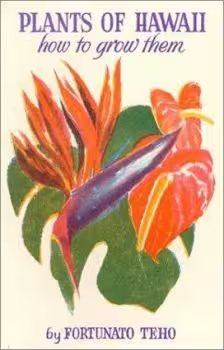
Fortunato Teho’s “Plants of Hawaii: How to Grow Them” is a practical, if somewhat pedestrian, guide aimed at equipping both residents and visitors with the foundational knowledge needed to cultivate plant life within the unique parameters of the Hawaiian archipelago. It serves as a serviceable introduction, but ultimately lacks the depth and nuance that would elevate it to a truly indispensable resource.
Teho’s strength lies in his straightforward and accessible writing style. He avoids overly technical jargon, opting for clear and concise language that makes the book approachable for novice gardeners. The step-by-step instructions for various gardening tasks, from soil preparation to planting and maintenance, are generally easy to follow.
The book’s coverage of essential gardening practices is commendable. Teho addresses topics such as watering, fertilizing, and pest and disease management with clarity and precision. His emphasis on adapting these practices to the specific challenges of Hawaiian growing conditions, such as varied microclimates and soil types, is particularly valuable.
However, the book’s regional focus, while its primary aim, is somewhat inconsistent. While Teho acknowledges the diverse growing environments within Hawaii, he often fails to provide specific recommendations for different regions. The advice on plant selection, for instance, is often generalized, neglecting the nuances of cultivating in the dry leeward areas versus the lush windward regions.
Furthermore, the book’s organization can be somewhat haphazard. The chapters are loosely arranged, lacking a clear and logical progression. This can make it difficult to locate specific information quickly, particularly for novice gardeners seeking guidance on a particular topic.
The book’s visual presentation is also a notable shortcoming. While the inclusion of photographs is helpful, they are often small and lack the clarity that would truly enhance the reader’s understanding of the plants and techniques described. The absence of detailed diagrams or illustrations further diminishes the book’s visual impact.
Teho’s writing style, while clear and informative, lacks the narrative flair that can transform a gardening handbook into a captivating read. It is functional and practical, but it lacks the evocative language that would truly inspire and engage readers.
The book’s emphasis on accessibility for beginners also creates a limitation. While commendable, it often results in oversimplification. Some topics, such as soil chemistry and pest management, are treated superficially, neglecting the complexities that experienced gardeners often encounter.
In conclusion, “Plants of Hawaii: How to Grow Them” is a serviceable introduction to cultivating plants in the Hawaiian Islands. Its clear and concise advice on essential gardening practices is a valuable asset. However, its inconsistent regional focus, haphazard organization, and underwhelming visual presentation prevent it from achieving its full potential. While it may serve as a helpful starting point for novice gardeners, more experienced cultivators will likely find it lacking in depth and nuance.



Reviews
There are no reviews yet.