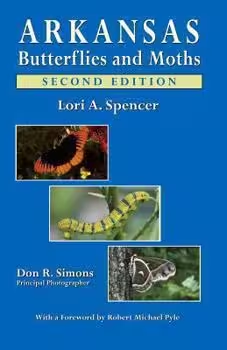
Lori A. Spencer’s “Arkansas Butterflies and Moths” is a commendable, if somewhat uneven, contribution to the regional lepidoptera literature. While it succeeds in providing a valuable resource for identifying and appreciating the diverse array of butterflies and moths found within the state, it also exhibits certain shortcomings that prevent it from achieving its full potential.
Spencer’s strength lies in her evident passion for her subject and her commitment to accessibility. The book is clearly aimed at a broad audience, encompassing both novice enthusiasts and more seasoned lepidopterists. The introductory sections, which cover basic lepidoptera biology and ecology, are particularly well-written, providing a solid foundation for understanding the intricate world of these insects.
The species accounts, which form the core of the book, are generally thorough and informative. Spencer provides detailed descriptions of the butterflies and moths, highlighting key identifying features and life history information. The inclusion of high-quality photographs is a significant asset, allowing for visual confirmation of species identification.
However, the book’s organization presents some challenges. While the taxonomic arrangement is logical, the lack of a comprehensive index can make it difficult to locate specific species quickly. This is a significant drawback for a field guide, where rapid identification is often crucial.
Furthermore, the depth of information provided varies considerably between species. While some accounts are comprehensive and insightful, others are somewhat cursory, lacking detailed information on habitat preferences or larval host plants. This inconsistency diminishes the book’s value as a comprehensive reference.
The ecological context of the butterflies and moths is also somewhat neglected. While Spencer briefly mentions habitat associations, she largely overlooks the intricate interactions between these insects and their environment. The book would have benefited greatly from a more thorough exploration of the ecological roles of butterflies and moths, as pollinators, herbivores, and prey items.
The discussion of conservation concerns is also relatively limited. While Spencer acknowledges the impact of habitat loss and pesticide use, she fails to delve into the specific threats facing Arkansas’s lepidoptera populations. This lack of emphasis on conservation is a missed opportunity to raise awareness and inspire action to protect these vulnerable insects.
In conclusion, “Arkansas Butterflies and Moths” is a valuable resource for anyone seeking to explore the diverse lepidoptera fauna of the state. However, its uneven coverage, organizational challenges, and limited ecological context prevent it from achieving its full potential. While it may serve as a useful starting point for novice enthusiasts, more experienced lepidopterists may find it somewhat lacking in depth and consistency.



Reviews
There are no reviews yet.