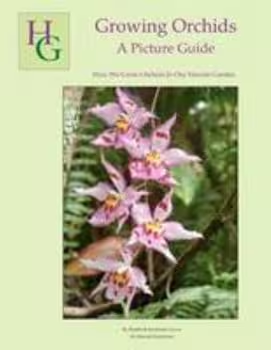
Rachel Leyva’s “Growing Orchids: A Picture Guide: How We Grow Orchids in Our Hawaii Garden” is a rather specific and visually driven approach to orchid cultivation, tailored to the context of a Hawaiian garden. It’s a book that leans heavily on its pictorial component, aiming to guide readers through practical techniques using visual aids, but this approach comes with both strengths and weaknesses.
The book’s primary strength, as indicated by its title, lies in its emphasis on visual instruction. The “Picture Guide” aspect suggests a reliance on photographs to illustrate various aspects of orchid growing. This can be a valuable asset, particularly for novice orchid enthusiasts who benefit from seeing, rather than just reading about, the steps involved in potting, watering, and other care routines. The Hawaiian garden setting also gives a specific backdrop to the techniques being shown.
The focus on “How We Grow Orchids” implies a personal and practical approach. Leyva likely shares her own experiences and techniques, offering a glimpse into her personal methods for cultivating orchids. This can be relatable and helpful for readers seeking real-world guidance, but it also means the information is presented from a specific perspective, and may not encompass the full range of orchid-growing methodologies.
However, the book’s reliance on visuals may come at the expense of detailed textual explanations. While photographs can be invaluable, they may not always convey the nuances of orchid cultivation. The book may lack in-depth information on the underlying scientific principles of orchid growth, such as the intricacies of root respiration, nutrient uptake, or the specific requirements of different orchid genera.
The book’s regional focus on a “Hawaii Garden” also presents a limitation. While the Hawaiian climate is well-suited for orchid cultivation, the techniques presented may not be universally applicable. Gardeners in cooler or less humid climates may need to adapt the methods described to suit their own conditions.
The book’s organization, while likely visually driven, may lack the structured format of a more comprehensive orchid guide. The information may be presented in a more anecdotal or pictorial manner, rather than in a logical and systematic progression.
Leyva’s writing style, while likely accessible and user-friendly, may prioritize clarity over scientific rigor. It may lack the detailed botanical terminology or nuanced explanations that would appeal to more experienced orchid growers.
In conclusion, “Growing Orchids: A Picture Guide” is likely a helpful and visually appealing introduction to orchid cultivation, particularly for those seeking practical guidance tailored to a Hawaiian garden setting. Its emphasis on photographs and personal experiences can be a valuable asset for novice enthusiasts. However, its potential limitations in textual detail, scientific explanation, and universal applicability may make it less suitable for those seeking a comprehensive and in-depth exploration of orchid growing.


Reviews
There are no reviews yet.