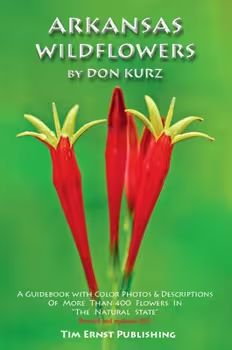
Don Kurz’s “Arkansas Wildflowers” is a commendable contribution to the field of regional botany, offering a comprehensive and accessible guide to the diverse array of flowering plants that grace the Arkansas landscape. It serves as a valuable tool for both the amateur naturalist and the seasoned botanist, effectively bridging the gap between scientific accuracy and practical field utility.
Kurz’s strength lies in his meticulous attention to detail and his commitment to clarity. The book is organized in a logical and user-friendly manner, likely employing color-coded sections or other visual cues to facilitate rapid identification. This thoughtful design is particularly beneficial for those encountering unfamiliar species in the field.
The plant descriptions are thorough and informative, encompassing key characteristics such as flower morphology, leaf arrangement, and habitat preferences. Kurz avoids overly technical jargon, opting for clear and concise language that enhances comprehension without sacrificing scientific accuracy. The inclusion of detailed photographs or illustrations further aids in the identification process, allowing users to visually confirm their findings.
Beyond mere identification, Kurz provides valuable insights into the ecological context of the wildflowers. He discusses their habitats, flowering periods, and geographical distributions within Arkansas, shedding light on the intricate relationships between plants and their environment. This ecological perspective adds depth to the book, transforming it from a simple identification guide into a valuable resource for understanding the state’s natural history.
Furthermore, Kurz’s work likely addresses conservation considerations, acknowledging the impact of habitat loss and environmental changes on Arkansas’s native flora. This awareness of ecological challenges adds a layer of responsibility to the book, encouraging readers to appreciate and protect the state’s botanical heritage.
The book’s field guide format is particularly noteworthy. Its compact size and durable construction make it an ideal companion for outdoor excursions, allowing users to readily identify wildflowers encountered during hikes and nature walks. This practical design enhances the book’s utility, transforming it into a valuable tool for exploration and discovery.
In conclusion, “Arkansas Wildflowers” is a well-crafted and informative guide that effectively captures the beauty and diversity of the state’s flowering plants. Kurz’s meticulous attention to detail, clear writing style, and ecological insights make this book a valuable resource for anyone seeking to explore and appreciate the botanical riches of Arkansas.



Reviews
There are no reviews yet.