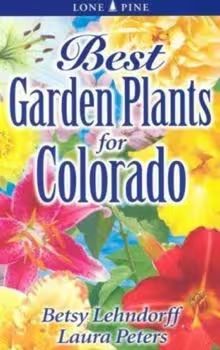
Lehndorff and Peters’ “Best Garden Plants for Colorado” is a practical, if somewhat predictable, guide tailored to the specific challenges and opportunities of gardening in the Centennial State. It serves as a useful resource for both novice and experienced gardeners seeking to cultivate thriving landscapes amidst Colorado’s diverse and often demanding climate.
The book’s strength lies in its regional focus. Lehndorff and Peters wisely acknowledge the significant variations in elevation, precipitation, and soil types that characterize Colorado, and they tailor their plant recommendations accordingly. The inclusion of plant lists categorized by specific growing conditions, such as xeric gardens, mountain gardens, and shade gardens, is particularly valuable.
The species descriptions are generally informative, providing key information on plant characteristics, cultivation requirements, and landscape uses. The authors emphasize the importance of selecting plants that are well-adapted to Colorado’s climate, highlighting drought-tolerant varieties and those that can withstand the state’s fluctuating temperatures.
However, the book’s approach to gardening practices is somewhat conventional. While Lehndorff and Peters advocate for sustainable gardening techniques, such as water conservation and soil improvement, they often fail to delve into the intricacies of these practices. The discussion of soil amendments, for instance, is rather cursory, neglecting the nuances of dealing with Colorado’s often alkaline soils.
Furthermore, the book’s focus on aesthetics occasionally overshadows its ecological considerations. While the authors emphasize the importance of creating visually appealing gardens, they often neglect the broader context of creating a balanced and sustainable ecosystem. The discussion of native plant communities and their roles in supporting local wildlife is limited, reducing the book’s value as a tool for ecological landscaping.
The book’s organization is logical and user-friendly, with plants categorized by type and growing conditions. However, the absence of a comprehensive index can make it difficult to locate specific information quickly. This is a significant drawback for a reference guide, where rapid access to information is often crucial.
The book’s visual presentation is adequate but not exceptional. The photographs, while generally of good quality, often lack the contextual depth that would enhance the reader’s understanding of the plants and their landscape uses. The absence of detailed planting diagrams or landscape design examples further diminishes the book’s visual impact.
Lehndorff and Peters’ writing style is clear and accessible, making the book suitable for a wide audience. However, it lacks the scientific rigor and nuanced analysis that would elevate the book to a truly scholarly work. It tends towards descriptive prose rather than analytical exploration.
In conclusion, “Best Garden Plants for Colorado” is a serviceable guide that provides a useful overview of plant selection and cultivation practices for the state. However, its conventional approach, limited ecological considerations, and underwhelming visual presentation prevent it from achieving its full potential. While it may serve as a helpful starting point for novice gardeners, more experienced cultivators will likely find it lacking in depth and innovation.



Reviews
There are no reviews yet.